
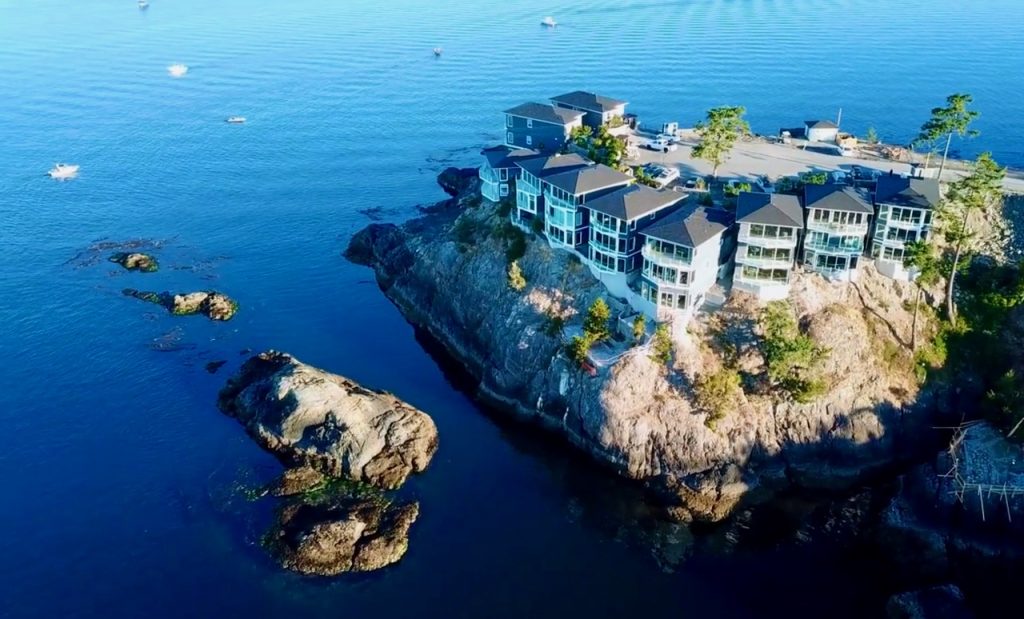
Ocean science & nature insights from SookePoint.
Canada’s South Pacific coastline holds secrets that most visitors never see, and the latest ocean science & nature insights from SookePoint reveal why this stretch of ocean defies everything scientists thought they knew about marine ecosystems.
Where the Pacific Comes Alive: Ocean Science & Nature Insights From SookePoint
Standing at the far southwest tip of Canada, SookePoint is more than a beautiful place—it is a living, moving, breathing ocean science laboratory. The coastline here forms a natural amphitheatre to the sea, where marine life, weather, currents and geology intersect in extraordinary ways.
Residents and visitors often say, “The whales come to us.” And they’re right. But why? What makes this exact location such a magnet for orcas, humpbacks, seals, salmon, seabirds, and every imaginable expression of the Pacific?
This special edition of the SookePoint Newsletter explores the hidden science behind the magic: the underwater topography, the kelp forests, the currents and tides, and the powerful climate patterns that shape the remarkable experience of living and visiting Canada’s South Pacific.
For those who love nature—or simply love knowing why nature behaves the way it does—these ocean science & nature insights will reveal why SookePoint is one of the hottest wildlife corridors on the entire West Coast.
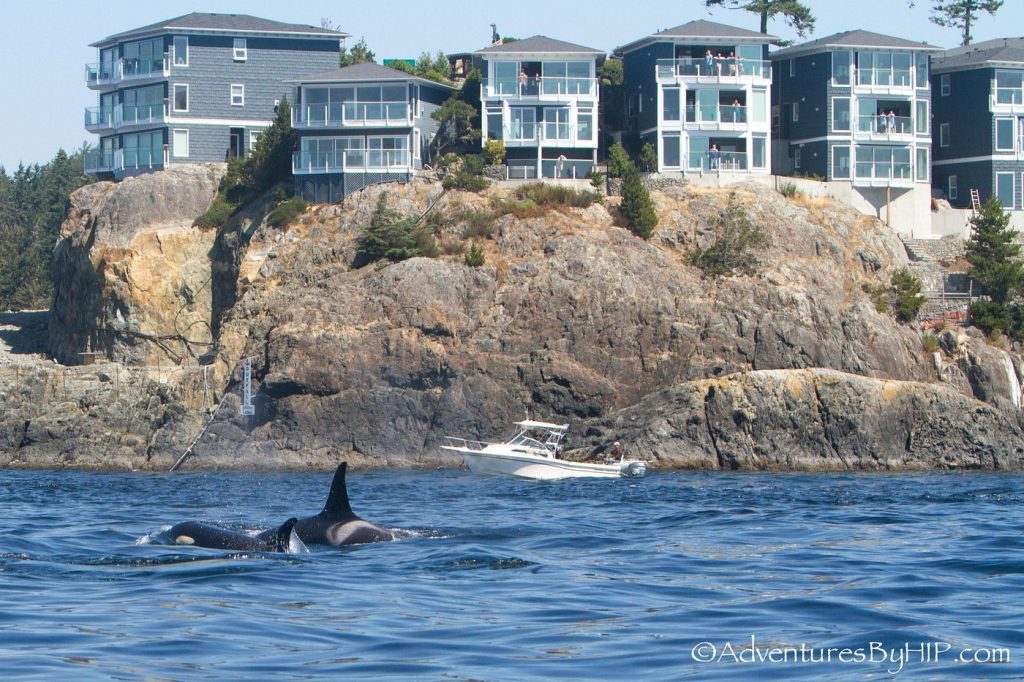
Whales frequent the waters off of SookePoint.
The Bend in the Coast: Why Whales “Come to Us”
Few places on the continent are more perfectly positioned than SookePoint for viewing whales. The dramatic bend of coastline at Possession Point (which we call SookePoint) acts like a natural turning point where whales shift direction as they travel between the Strait of Juan de Fuca and the open Pacific. This “corner” is not just a geographic feature—it’s a biological funnel.
Whales Follow the Path of Greatest Abundance
Orcas and humpbacks cruise along edges, drop-offs, and current lines where food concentrates. The underwater shelf most populated with their prey—salmon, herring, anchovy, squid—swings directly past SookePoint. To a travelling whale, it’s like following a buffet line that gently curves around the point.
SookePoint Creates an Acoustic Advantage
Sound behaves differently around headlands. Orcas use echolocation to hunt, and headlands reflect and channel sound in ways that make navigation easier and prey detection stronger. This makes the SookePoint coastline not only a corridor but a communication-enhancing zone.
The “Whale Highway” Effect
Marine naturalists often describe certain coastal lines as “whale highways.” SookePoint sits right beside one of the busiest lanes on the route between Alaska, Vancouver Island, Washington and California. When people say “the whales come to us,” they’re describing a predictable pattern rooted in geography, biology and physics.
And the result is spectacular: from your great room, deck, or ocean cottage living space, you can witness some of the most intimate cetacean moments anywhere in North America.
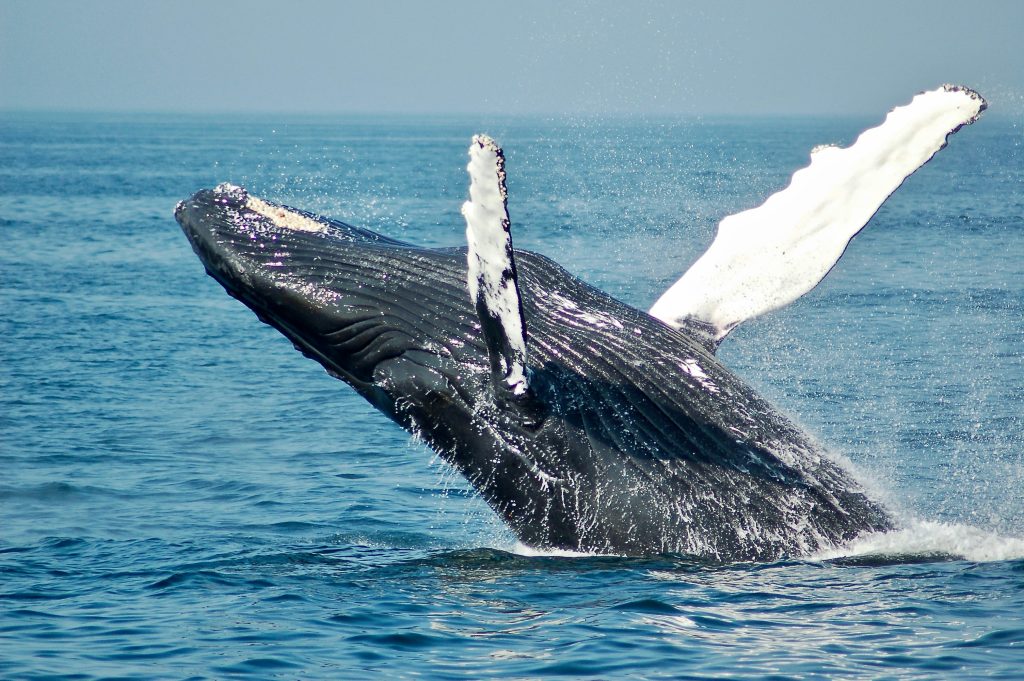
Sookepoint is a whale enthusiast’s paradise.
The Underwater Topography That Funnels Marine Life:
What You See at the Surface Only Hints at What Lies Beneath
If you could drain the sea around SookePoint, you’d discover a dramatic underwater landscape of shelves, cliffs, ridges, and deep channels—features that concentrate nutrient-rich water and shape the behaviour of every creature in this ecosystem.
The Three Key Features Beneath the Waves
The Continental Shelf Break
Just offshore, the seabed drops sharply from relatively shallow coastal waters into deeper channels. This vertical change forces cold, nutrient-dense water upward—a process called upwelling. Upwelling feeds plankton, which feeds forage fish, which feeds salmon, which feeds seals and whales. The entire food chain is powered by these underwater cliffs.
The “Cornering Current”
Where the land juts into the sea, currents split and curl. At SookePoint, this creates a predictable zone where water accelerates on one side and decelerates on the other. Slower water allows plankton and baitfish to collect in huge numbers. Faster water carries oxygen and nutrients that sustain kelp forests and healthy marine habitats. From above, SookePoint sits beside a shimmering seam where these two current behaviours meet—prime hunting ground for seabirds, salmon and marine mammals.
The Salmon Superhighway
The Strait of Juan de Fuca is a migratory route for multiple species of salmon returning to rivers throughout Washington and British Columbia. These fish hug the coast for orientation and safety. SookePoint happens to lie beside the exact migratory path where salmon schools are most concentrated before splitting into various river-bound branches. Wherever there is salmon, there is nearly everything else.

Wherever there is salmon, there is nearly everything else.
Kelp Forests, Tides and Migration: The Living Structure of the Coast
If whales and salmon are the headline performers, the kelp forests are the stage crew—the quiet, essential infrastructure supporting life.
The Secret Power of Kelp Forests
Kelp grows in abundance in the rocky shallows around SookePoint. These forests:
- Provide nursery habitat for young fish
- Buffer waves and reduce shoreline erosion
- Produce oxygen at extraordinary rates
- Anchor entire food webs, from herbivores to apex predators
Giant kelp can grow up to two feet a day under the right conditions. These underwater forests rise toward the surface, absorbing energy from waves and creating calmer pockets where fish hide, feed and rest.
Walk along the shore and you’ll often see harbor seals popping their heads up within or beside the kelp. Predatory fish weave through it. Sea otters rely heavily on it. And orcas know that seals are easier to find where kelp forests intersect with steep drop-offs.
The Influence of Tides
The Strait of Juan de Fuca experiences powerful tidal flows—some of the strongest in the region. These tides determine when whales feed, when seabirds dive, and when baitfish rise. They also move nutrients through kelp forests like a giant respiratory system.
At SookePoint, the combination of strong tides and deep water close to shore creates dramatic vertical movement. This means you can witness tide-driven spectacles—fish running in tidal seams, seabirds diving in synchronized waves, and whales surfacing where the water shifts direction.
- Migration Routes—Nature’s Global Rhythms
- Beyond salmon, hundreds of species move through SookePoint’s waters seasonally:
- Humpback whales migrate between Alaskan feeding grounds and tropical breeding areas.
- Gray whales pass by on one of the longest migrations of any mammal.
- Orcas move in patterns shaped by salmon availability and social structure.
- Sea lions and elephant seals follow fish schools up and down the coast.
Seabirds such as shearwaters, murres, auklets and puffins ride atmospheric and marine highways. SookePoint sits at a biological intersection where many of these migrations overlap—right at a major crossroads of the Pacific.
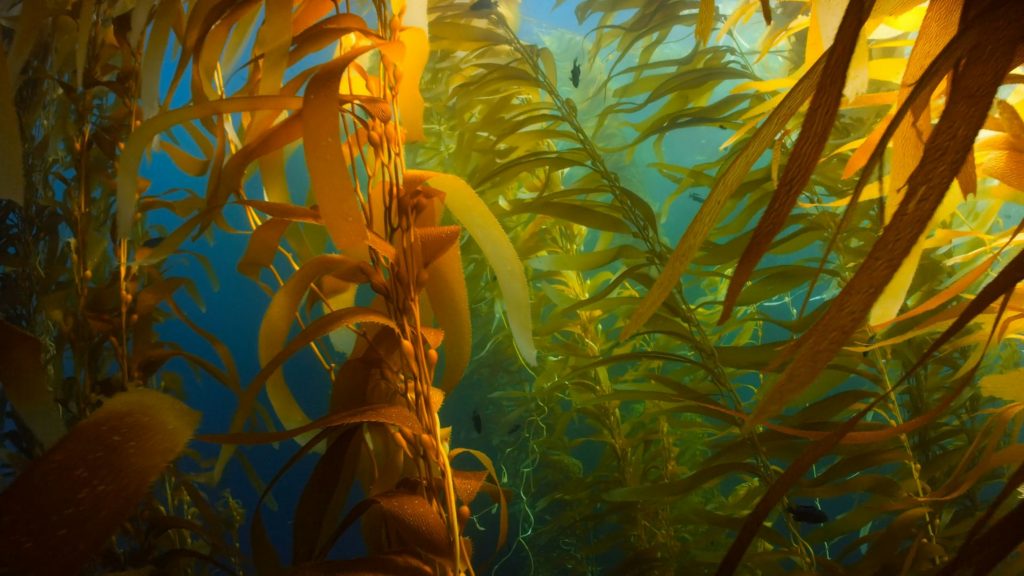
Kelp grows in abundance in the rocky shallows around SookePoint.
Weather, Climate and the Spectacle of the Sea
One of SookePoint’s most defining features is its microclimate.
Canada’s South Pacific
Because of the warm Pacific Ocean current that hugs Vancouver Island’s coastline, SookePoint benefits from a climate far milder than most of Canada. The ocean acts as a thermal regulator: cool in summer, warm in winter. This reduces temperature extremes and creates a comfortable environment year-round. It’s what we call the Goldilocks Zone. That’s why palm trees can grow, why winters remain green, and why the air always smells fresh and alive.
Storm Watching—Nature’s Theatre
SookePoint’s orientation provides a front-row seat to some of the most dramatic weather shows in the region:
- Windstorms rolling down the Juan de Fuca Strait
- Long Pacific swells crashing against our solid rock peninsula, neighbouring Wilderness Park and offshore reefs
- Rain curtains sweeping across the water
- Sunbeams breaking through storm clouds in cinematic bursts
From your ocean cottage or great room, you can experience the full power of Pacific weather in complete comfort. Many owners say storm watching days become their favourites—when the sea reveals its raw energy and the coastline feels timeless and immense.
The Rare Beauty of Temperature Inversions
On some mornings, an inversion traps mist over the water while the sun rises clear above it. The effect is ethereal: whales surfacing through a glowing silver fog, sea lions barking as they cruise by, and eagles gliding over the top of the cloud layer. These moments feel like living inside a painting.
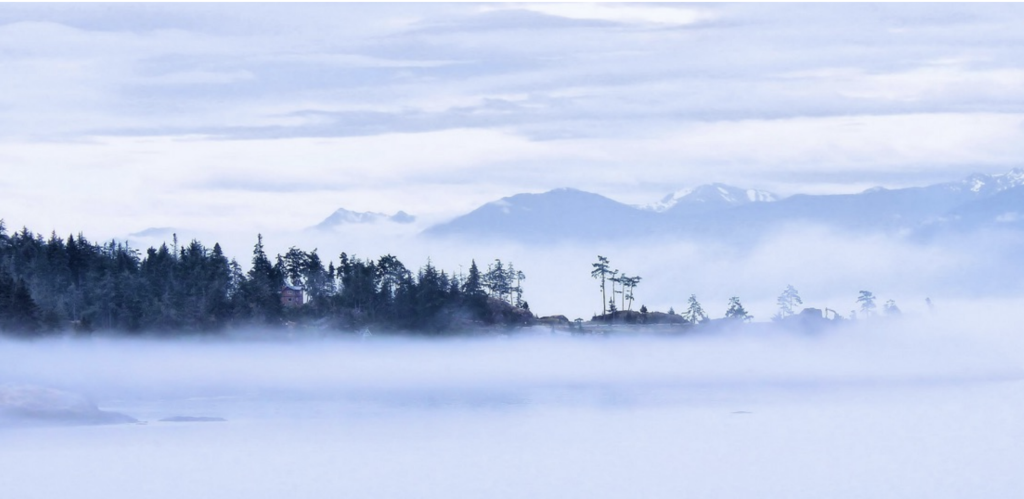
The etherial beauty of a temperature inversion.
The Air Itself: Why It Smells So Pure
People notice instantly: the air at SookePoint feels different. Cleaner. Sharper. More alive. That’s because ocean waves produce negative ions, tiny particles associated with stress reduction, clearer breathing, and elevated mood. The abundance of salt spray, wind, and kelp forests amplifies this natural effect. For many, simply breathing the air becomes part of the experience of renewal and wellbeing.
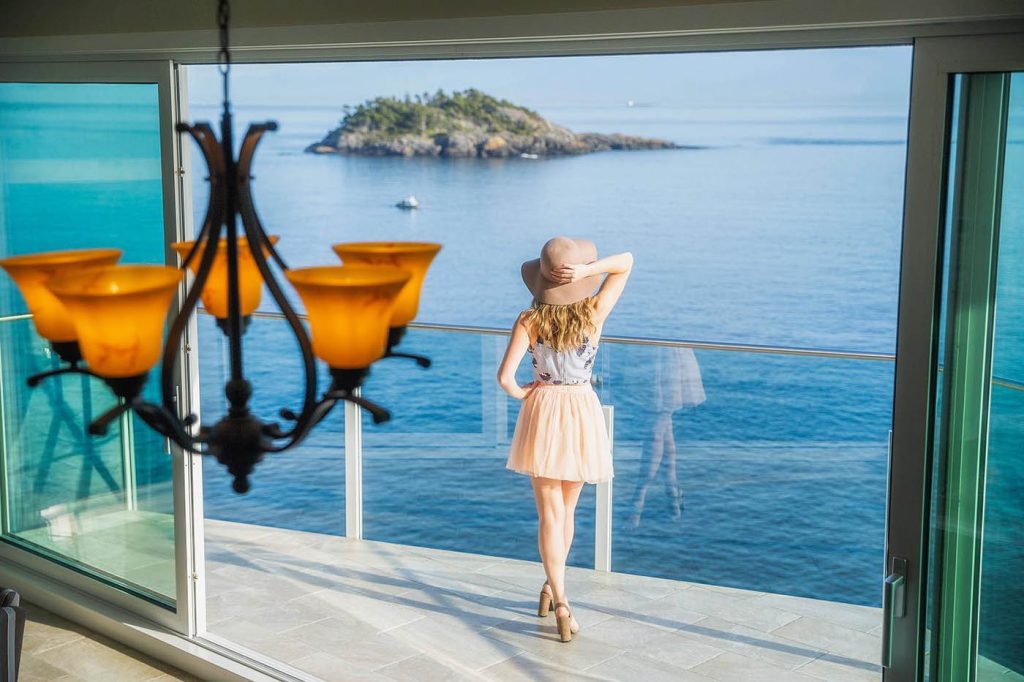
You’lll notice that the air at SookePoint feels different.
A Living Sanctuary for the Future
Understanding the ocean ccience & nature insights behind SookePoint’s magic only enhances the awe. This place is not an accident—it is a product of geology, oceanography, ecology and climate working together in harmony.
The wildlife you see from your deck is participating in ancient migratory movements. The tides that shift the kelp forests are driven by lunar cycles older than civilization. The storms that roll across the Pacific are born thousands of kilometres away. And yet, at SookePoint, these grand forces present themselves intimately, right outside your window.
As development continues—with careful stewardship and respect for the environment—the commitment is clear: to ensure SookePoint remains one of the most extraordinary natural sanctuaries in Canada. A place where people feel the pulse of the planet, connect deeply with the sea, and gain a sense of perspective that only wild places can offer. This is the science of SookePoint. This is the story behind the beauty. And this is why the whales—along with so much more—come to us.